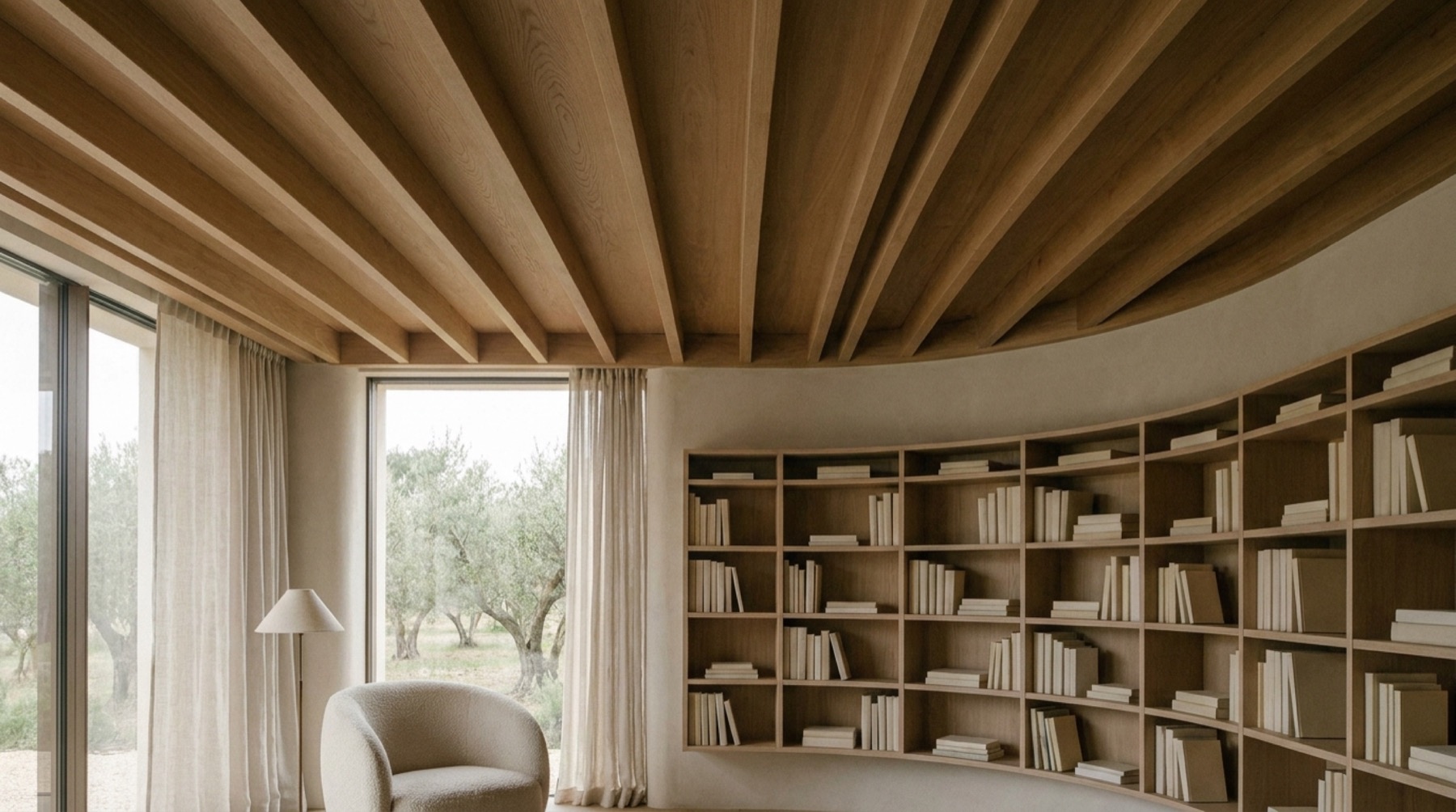
Sound is the longevity variable that operates below conscious notice. The cortex has habituated to the bedroom HVAC, the road outside the window, the rail line on the horizon. The cardiovascular system has not.
What sound actually is, in a residence
Three regimes matter:
- Daytime ambient, the baseline against which conversation, music, and concentration occur. Reverberation time and absorption set the cognitive load.
- Nocturnal, when the auditory system is awake even if the cortex is not. The thresholds at which sleep architecture is disturbed are far lower than people assume.
- HVAC and mechanical, the continuous noise floor produced by ventilation, heating, cooling, and pumps. Often the quietest in absolute terms; often the most consequential because it never stops.
The MAVI 129 Sound domain scores all three.
The thresholds that matter
- Nocturnal decibel average: chronic 45 dB(A) raises cardiovascular risk independently of subjective sleep quality (WHO 2018).
- Daytime average: above 55 dB(A) measurably degrades concentration and conversational comfort.
- RT60: 0.4–0.6 seconds is restorative for residential rooms; above 1.0 produces fatigue; below 0.3 feels acoustically dead.
- HVAC noise floor: target below 30 dB(A) at the bed.
Where the design decisions actually live
For most residential projects, the sound outcome is set by four decisions:
Glazing and window seal. A standard double-glazed window blocks roughly 30 dB; a high-performance acoustic window can block 45 dB. The difference between sleeping next to a busy road and not. Specification at design is cheap; retrofit is genuinely expensive.
Mass and isolation. Walls between bedrooms. Floor-to-floor isolation against impact noise from above. Decoupled stud walls and resilient channels. Easy to design in, almost impossible to retrofit at scale.
Reverberation control. Soft furnishings (textiles, rugs, upholstery), absorbent ceiling treatment in hard-surfaced rooms (kitchen, bathroom, large open-plan). Acoustic plaster where finish demands it. The unit-of-work is RT60 by room.
HVAC specification. Fan-coil units selected for sound power; duct geometry that doesn’t produce turbulence; vibration isolation between mechanical room and habitable space. The single biggest source of noise in many otherwise quiet homes.
What “sound” looks like in a MAVI Blueprint
A residence’s Sound score is built from sound-pressure-level measurement at the bed (day and night, A-weighted), reverberation time measurement by room (impulse response or sweep), HVAC noise floor measurement at each diffuser, and an external-source survey (traffic by hour, rail, flight paths, neighbour mechanical).
The output is a 0 to 100 sub-score and a priority intervention list. For most residences, the highest-leverage interventions are bedroom glazing and HVAC noise floor.
The single thing to do today
Sleep with a free smartphone sound-meter app on the bedside table. Look at the numbers in the morning. Most people are surprised how loud their bedroom is at night. The MAVI Snapshot does ambient-noise modelling for your address; the Blueprint does the per-room measurement and intervention design.