The Habits domain is where architecture meets behaviour change. Every other domain in the MAVI 129 framework is about the exposure environment, what the body absorbs, sees, hears, touches. Habits is about what the body does inside the architecture, and how the architecture nudges, biases, and enables that doing.
What “habits” actually means in a residence
Four levers matter:
- Movement nudge: how the layout produces incidental steps, sit-to-stand variation, stair use, garden access. The unit is NEAT.
- Food architecture: how the kitchen, pantry, fridge, and food-prep flow biases what gets eaten. Cookware, storage, surface, and the geometry of kitchen-to-table.
- Material chain: the daily-contact material specification, kettles, water bottles, cutting boards, cookware, food storage, shower curtain. The objects the body interacts with most often.
- Routine surfaces: the architecture of the morning routine, the wind-down sequence, the workspace, the bath. Each is an opportunity to design behaviour into the building.
The thresholds that matter
This domain is less about numerical thresholds and more about specifications. A representative shortlist:
- Daily NEAT step-target by design: a residence should produce above 3,000 incidental steps per day from layout alone, before intentional exercise.
- Cookware specification: cast iron, carbon steel, stainless, properly-bonded ceramic. Avoid PFAS-coated non-stick at high heat; aluminium with damaged anodising; glass-lined bakeware compromised by chip damage.
- Kettle and water-storage specification: glass or stainless interior; never plastic interior, especially when heated.
- Cooking-oil specification by task: smoke point matched to heat application. High-heat sear (avocado, refined olive); medium-heat sauté (olive, butter); low-heat dressing (extra-virgin olive); baking (butter, ghee, neutral oils as recipe requires).
- Workspace sit-to-stand: at least one major workspace per residence with sit-to-stand variation built in.
Where the design decisions actually live
For most residential projects, the habits outcome is set by four decisions:
Internal layout for movement. Stairs visible and prominent versus lifts hidden. Garden access on the daily flow path. Bedroom and bathroom on different levels (where building scale permits). The kitchen-to-table-to-living triangle deliberately walked.
Kitchen and pantry topology. Whole-food shelving at eye level; processed foods either absent or out of immediate reach. The kitchen island designed for prep, not just for socialising. The cooktop hood specified for actual ventilation, not just appearance.
Workspace specification. Sit-to-stand desk in the home office. View-cone with biophilic anchor. Acoustic register for focus. The habit of working not in bed is a layout problem before it is a discipline problem.
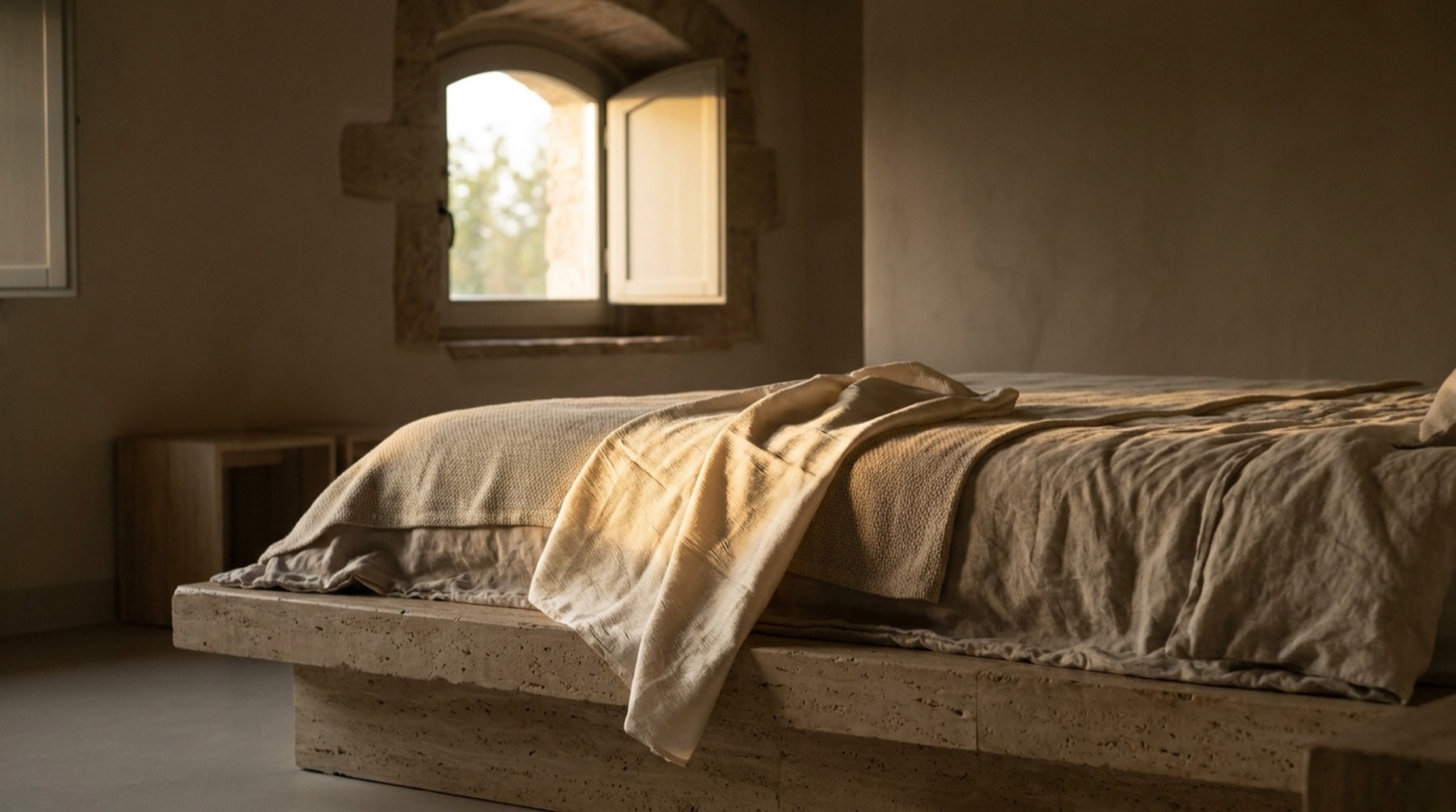
Wind-down architecture. Bath topology that supports the pre-sleep routine. Bedroom register distinct from working zones. Phone-charging station outside the bedroom. The architecture of not bringing devices to bed is a layout decision.
What “habits” looks like in a MAVI Blueprint
A residence’s Habits score is built from a layout-walkability analysis (NEAT-step modelling), a kitchen and pantry inventory (cookware, storage, surface chemistry, oil and condiment chain), a workspace audit (sit-to-stand provision, view-cone, acoustic and light register), and a wind-down sequence review (bath, bedroom, phone-storage architecture).
The output is a 0 to 100 sub-score and a priority intervention list, often with cross-cutting recommendations to other domains (Mind, Materials, Light) where the habit and the exposure share a surface.
The single thing to do today
Walk the path you walk every morning. Count the steps. Look at the surfaces. Ask whether the architecture is helping the morning routine or working against it. The MAVI Blueprint does the layout-and-habit analysis as part of the full ten-domain framework.