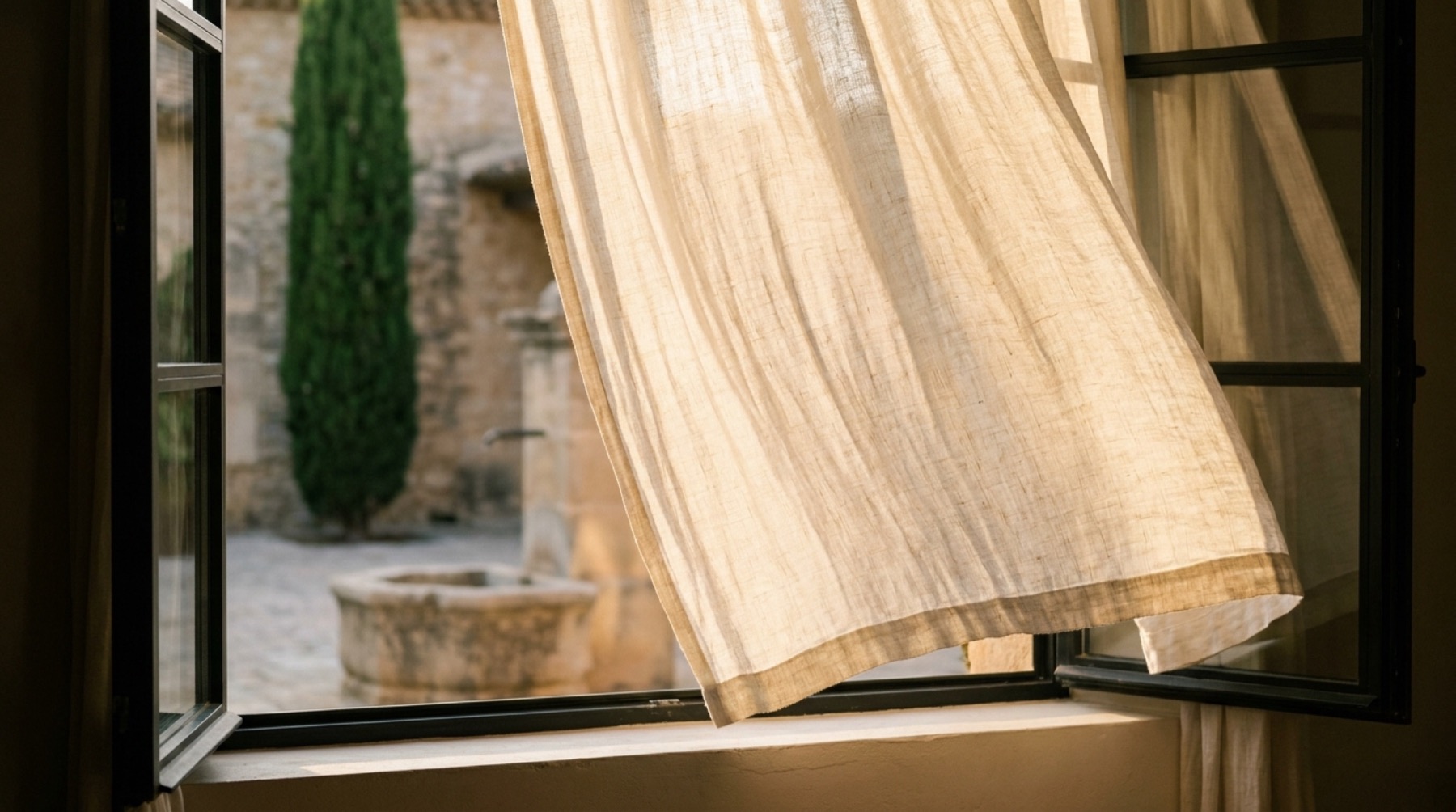
The most often-quoted statistic in environmental health is that adults spend more than ninety percent of their lives indoors. The corollary is rarely stated: ninety percent of the air you breathe in your lifetime, your home is responsible for. That is the variable longevity architecture begins with.
What air actually is, in a residence
Indoor air is the cumulative product of four inputs:
- What enters through windows, doors, and the building envelope (pollen, traffic-source PM2.5, wildfire smoke, humidity, allergens).
- What is generated inside by occupants and activity (CO₂ from breath, ultrafine particulate from cooking, VOCs from cleaning products and personal-care, microbiological aerosol from showers).
- What off-gasses from the materials of the building itself (formaldehyde from engineered wood, VOCs from paints and adhesives, phthalates from soft plastics).
- What is filtered out by the HVAC system, by surface absorption, and by air exchange with the outside.
The MAVI 129 Air domain scores all four. The output is a single air-quality factor in the framework, and the highest-leverage one in most residences.
The thresholds that matter
The numbers worth memorising:
- PM2.5: WHO 2021 annual guideline is 5 µg/m³. Most urban indoor environments average two to four times that. Particulate below 2.5 µm penetrates deep alveolar tissue and crosses into the bloodstream.
- CO₂: above 1000 ppm, decision-making and complex-task performance measurably degrade (Allen et al. 2016). A closed bedroom routinely exceeds this by mid-evening.
- Formaldehyde: classified by IARC as a Group 1 human carcinogen. Off-gases from engineered wood products, some adhesives, and a small number of textile finishes.
- NO₂: produced by gas combustion. Without external-ducted ventilation, kitchen levels regularly exceed outdoor regulatory limits during cooking.
- Radon: WHO action level 100 Bq/m³. Second leading cause of lung cancer after tobacco.
Every recommendation we make against these thresholds is cited.
Where the design decisions actually live
For most residential projects, the air-quality outcome is set by four decisions:
Filtration class. MERV 13 captures most fine particulate; HEPA captures 99.97% of 0.3 µm particles. The filter slot is usually already there in the HVAC return; the upgrade is a forty-pound choice that pays back across the life of the system.
Ventilation rate. A closed-window bedroom is a CO₂ accumulator. The fix is balanced mechanical ventilation, ideally with heat or energy recovery (HRV/ERV) so the comfort cost is near-zero. At design stage this is a small line item; retrofit is harder.
Combustion sources. Induction beats gas for indoor air quality almost without exception. Where gas is kept (chefs, hospitality), the externally-ducted hood is the variable to spend on, not the chamber size.
Material specification. Low-VOC paint, formaldehyde-free engineered wood, untreated natural-fibre soft furnishings. The cheapest moment to specify is at sourcing; retrofit means strip-out.
What “air” looks like in a MAVI Blueprint
A residence’s Air score is built from indoor measurement (PM2.5, PM10, CO₂, VOC totals, formaldehyde, radon where geology suggests), the HVAC specification (filtration class, ventilation rate, fresh-air introduction), the cooking infrastructure (induction vs gas, hood specification), and the material specification audit (paint, engineered woods, soft furnishings, cleaning-product residue).
The output is a 0 to 100 sub-score and a list of priority interventions ranked by cost-per-quality-of-life-year, the unit longevity medicine has settled on.
The single thing to do today
Run the free MAVI Snapshot of your address. The Air pillar is one of the four scored from public data: ambient PM2.5 by station, traffic-source modelling, wildfire-season risk, and the air-quality regulatory baseline of the geography. Seven minutes, no card required. It is the fastest answer you can get to the question what is the air doing to me.