The Allen et al. 2016 paper at the Harvard T.H. Chan School of Public Health gave the longevity field a number it has not stopped using: 1000 ppm. Above that level of indoor carbon dioxide, cognitive performance on the strategic, information-utilisation, and crisis-response sub-scales of the SMS test measurably falls. At 1400 ppm, the effect is severe.
The number matters because almost every closed bedroom on Earth passes it.
Why the bedroom
Two adults breathing in a closed room at occupancy rates standard for a residence will produce somewhere between 0.5 and 1 cubic feet per minute of CO₂. A typical 30 m³ bedroom with a closed door, closed window, and no mechanical ventilation reaches 1500-2500 ppm by morning, depending on metabolic load.
The CO₂ is not toxic at those levels. The problem is the cortex.
The architecture decision that fixes this is small and irreversible-once-made: balanced mechanical ventilation, ideally with heat recovery (HRV/ERV), specified at design stage. Marginal cost is real but small; the comfort and energy outcomes are net positive. Retrofit is harder.
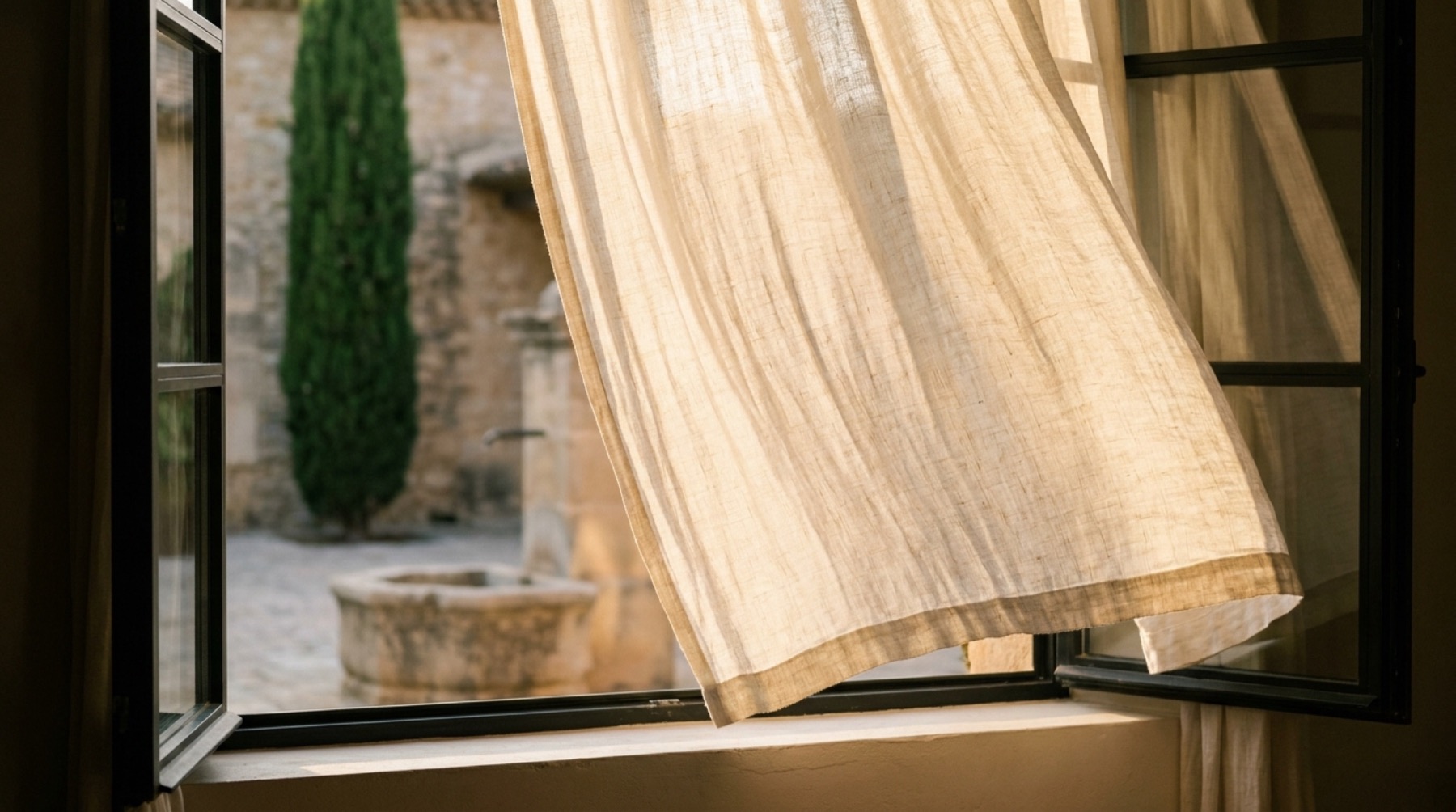
In existing buildings without that infrastructure, the workaround is the trickle vent or the open window. Most residential bedrooms gain genuine cognitive benefit from a one-centimetre crack overnight.
The corollary in the day
The same logic applies to the home office. A room used for focused work for four hours with the door closed accumulates CO₂ at the same rate, against a smaller volume per occupant. The afternoon energy drop that gets blamed on lunch is, in many homes, a CO₂ accumulation problem.
What to measure
The gear is cheap. An Aranet4 or equivalent NDIR CO₂ monitor on the bedside table gives a real-time reading and a 24-hour graph. Most people are surprised what their bedroom does between 23:00 and 07:00.
The MAVI Diagnostic does this measurement as standard, alongside PM2.5, VOC totals, formaldehyde, and where the geology requires, radon. The output is a per-room intervention list ranked by cost-per-quality-of-life-year.
The single thing to do tonight
Crack the window one centimetre. Sleep. Notice the morning.
The architecture half of the answer is documented in the Air domain of the MAVI 129™ framework.