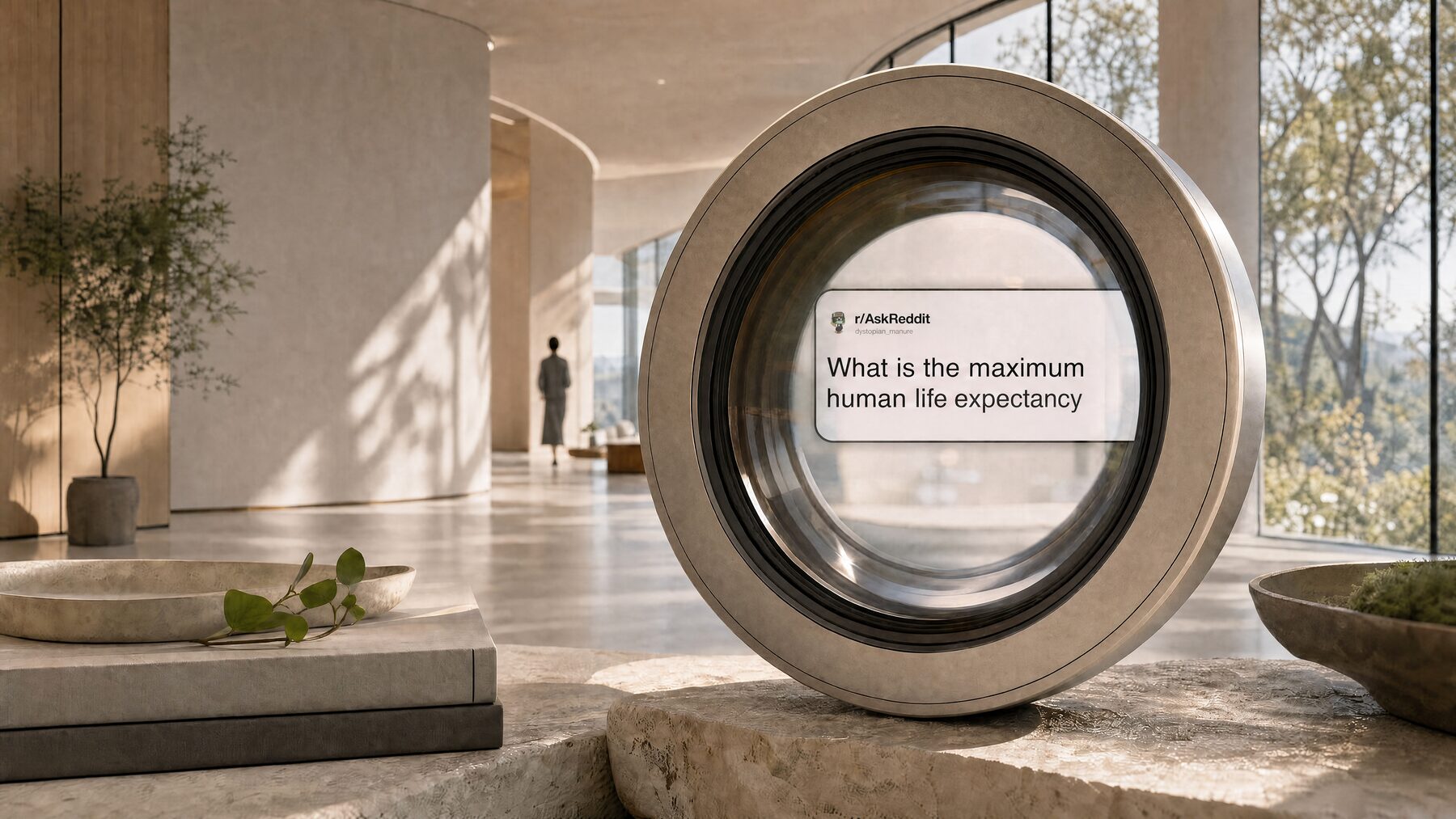
Answering longevity questions for WIRED, Dan Belsky of the Columbia Aging Center makes one move that changes everything. He stops asking how old you are biologically and starts asking how fast you are ageing right now. It sounds like a small reframing. It is the difference between a photograph and a speedometer.
A pace, not a number
Belsky's DunedinPACE clock, published in Nature Aging in 2022, reads DNA methylation, the chemical marks on the genome, to estimate the rate of multi-organ decline. The scale is intuitive: a value of about 1.0 means you are accumulating roughly one biological year per calendar year. Below 1.0 you are ageing slower than the wall clock; above it, faster. The Dunedin cohort it was built on has been tracked since birth in 1972, which is why the tool measures a rate rather than a snapshot. A static "biological age" tells you where you are. A pace tells you where you are headed, and whether anything you change actually bends the line.
Around 1.0 is one biological year per calendar year. Below is slower, above is faster. After Belsky, Nature Aging, 2022.
Modifiable means there are inputs
The crucial finding is that pace is not fixed. It responds to behaviour and environment, which is the entire point of measuring it: in trials, the headline use of DunedinPACE is to test whether an intervention actually slows the rate. And small differences compound. A pace a little above 1.0 does not cost you a little. Sustained across a decade it accrues into meaningfully more biological ageing than the calendar would suggest; a pace below 1.0 banks the difference the other way.
If the pace can be moved, then something is moving it. The studies weigh the usual inputs, diet, exercise, smoking, stress, but rarely isolate the one place where most of those exposures are actually delivered.
The input nobody monitors
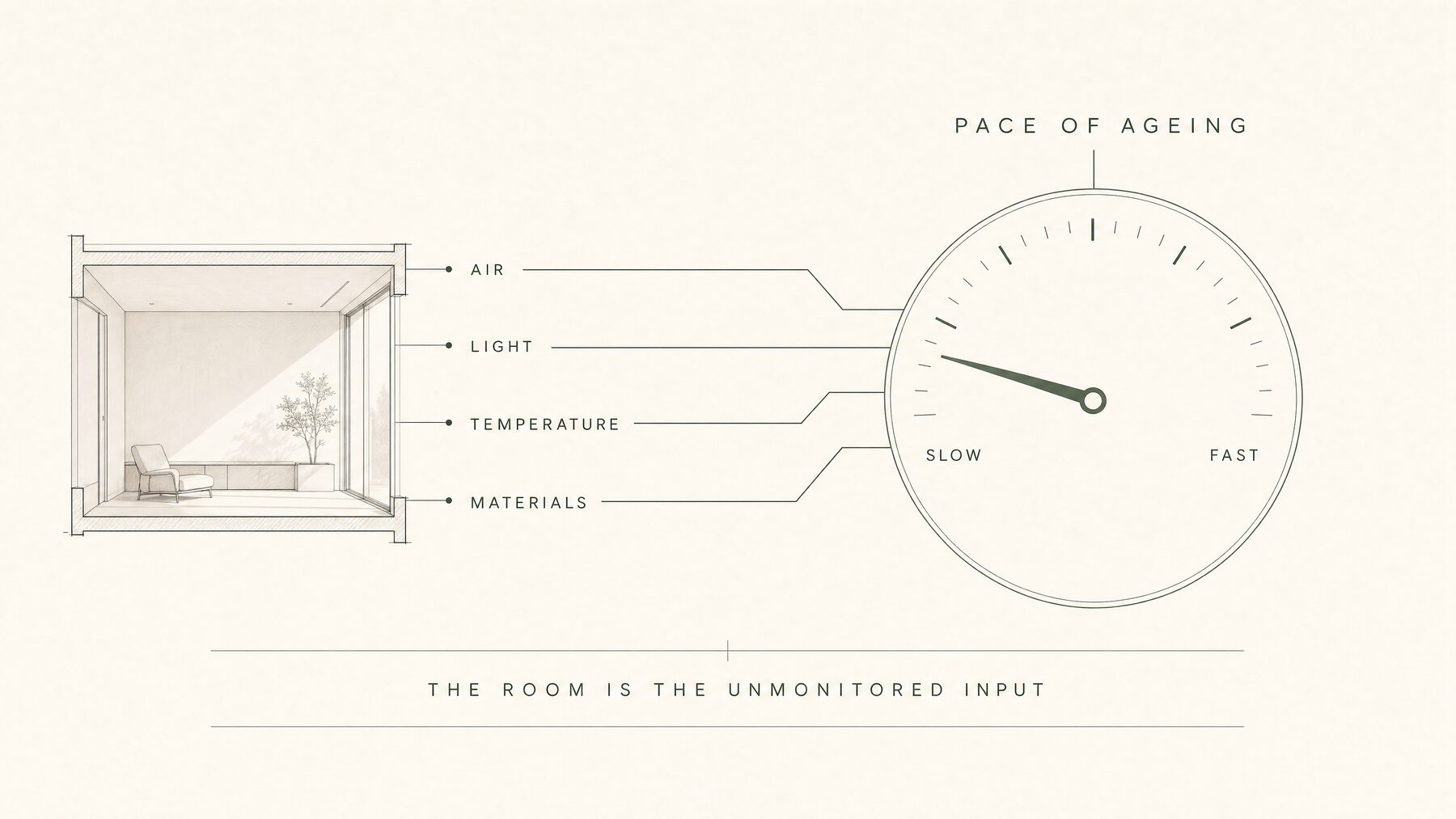
You absorb your environment somewhere. For most people that somewhere is home: the air breathed for a third of every day while asleep, the light that sets or misses the clock, the temperature the body fights all night, the materials off-gassing in a closed room. Pace-of-ageing research treats exposure as a number that arrives from nowhere. The building is where it arrives. It is the largest single source of cumulative environmental load, and it is the one input almost no one measures.
Measure the room
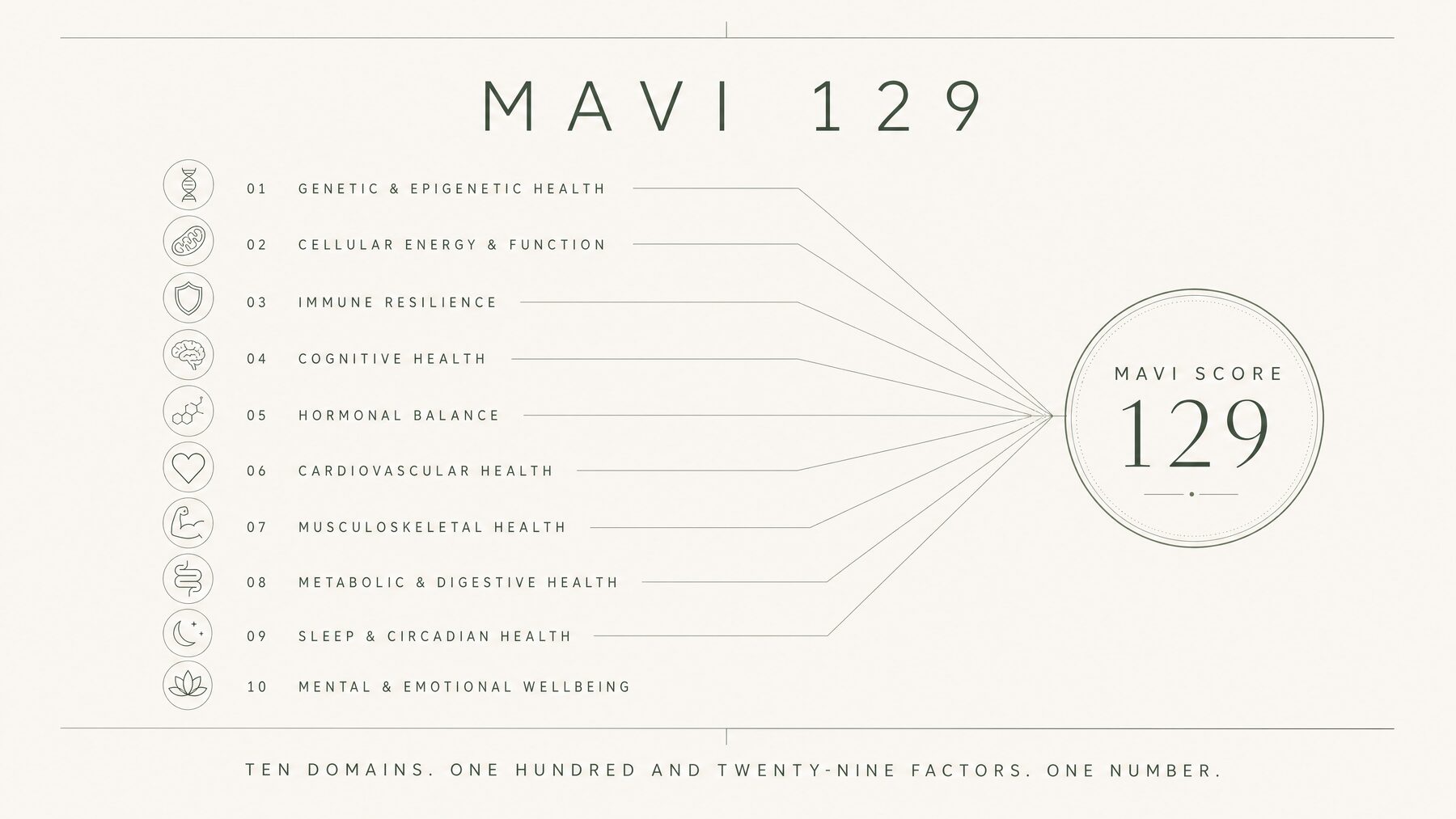
That is precisely what MAVI does. We read a home across ten domains and one hundred and twenty-nine measurable factors and turn it into a single score, so the environmental input to your pace of ageing stops being invisible. Belsky made the rate of ageing a number you can move. MAVI makes the room a number you can read.
What to do now
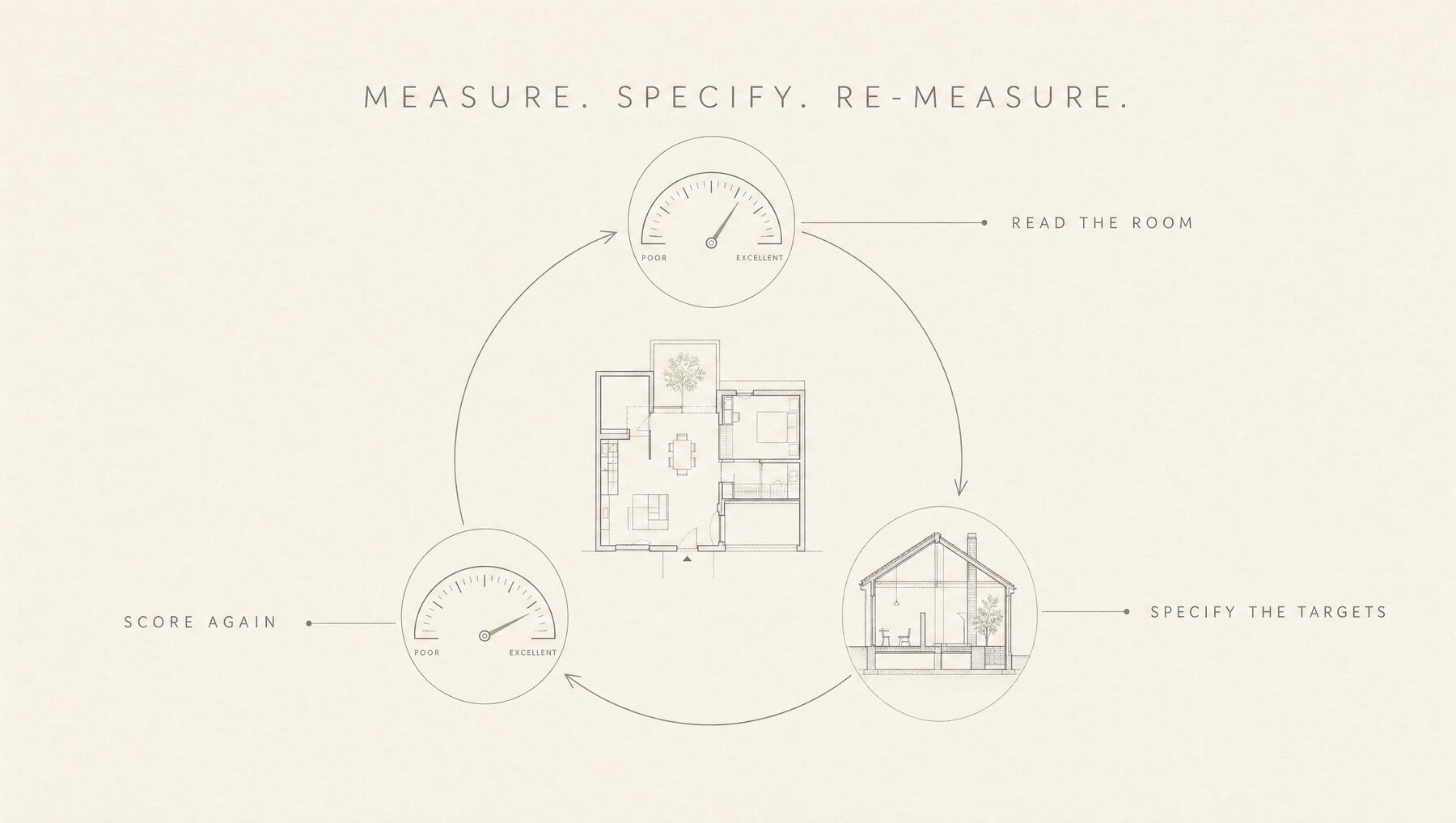
You cannot move what you do not measure. Start with the room, in the order that gives the most return per change:
- Air
- PM2.5 < 5 µg/m³
- Light
- < 2700K before bed
- Temperature
- 16 to 19 °C
- Sound
- < 30 dBA at night
- Measure it. A free MAVI Snapshot reads your address across eight live data sources; the Diagnostic scores all ten domains and the full 129.
- Air. Aim for fine particulate (PM2.5) under 5 µg/m³ and bedroom CO₂ under about 800 ppm overnight. Both drive the inflammation that shows up in ageing markers. MERV-13 filtration and real ventilation, not a cracked window in winter.
- Light. Bright daylight in the morning, then warm light under about 2700K and low intensity in the last two hours before bed, and true darkness to sleep in. This protects the melatonin rhythm that gates overnight repair.
- Temperature. Hold the bedroom around 16 to 19°C so the body can shed heat and reach deep sleep.
- Sound. A night-time acoustic floor under about 30 dBA, the WHO guideline, so the nervous system fully stands down.
- Materials. Low-VOC finishes and furnishings; let anything new off-gas before it shares your air.
- Re-measure. The point of a pace is that it moves. Score, change the room, score again.
The single sentence
Belsky measures how fast you are ageing. MAVI measures, and changes, the room that is doing a large part of it.
This essay responds to Dr. Dan Belsky answering longevity questions for WIRED, read through the MAVI lens. Generate a free Snapshot of your home.