Thermal Comfort Is a Health System, Not a Setting

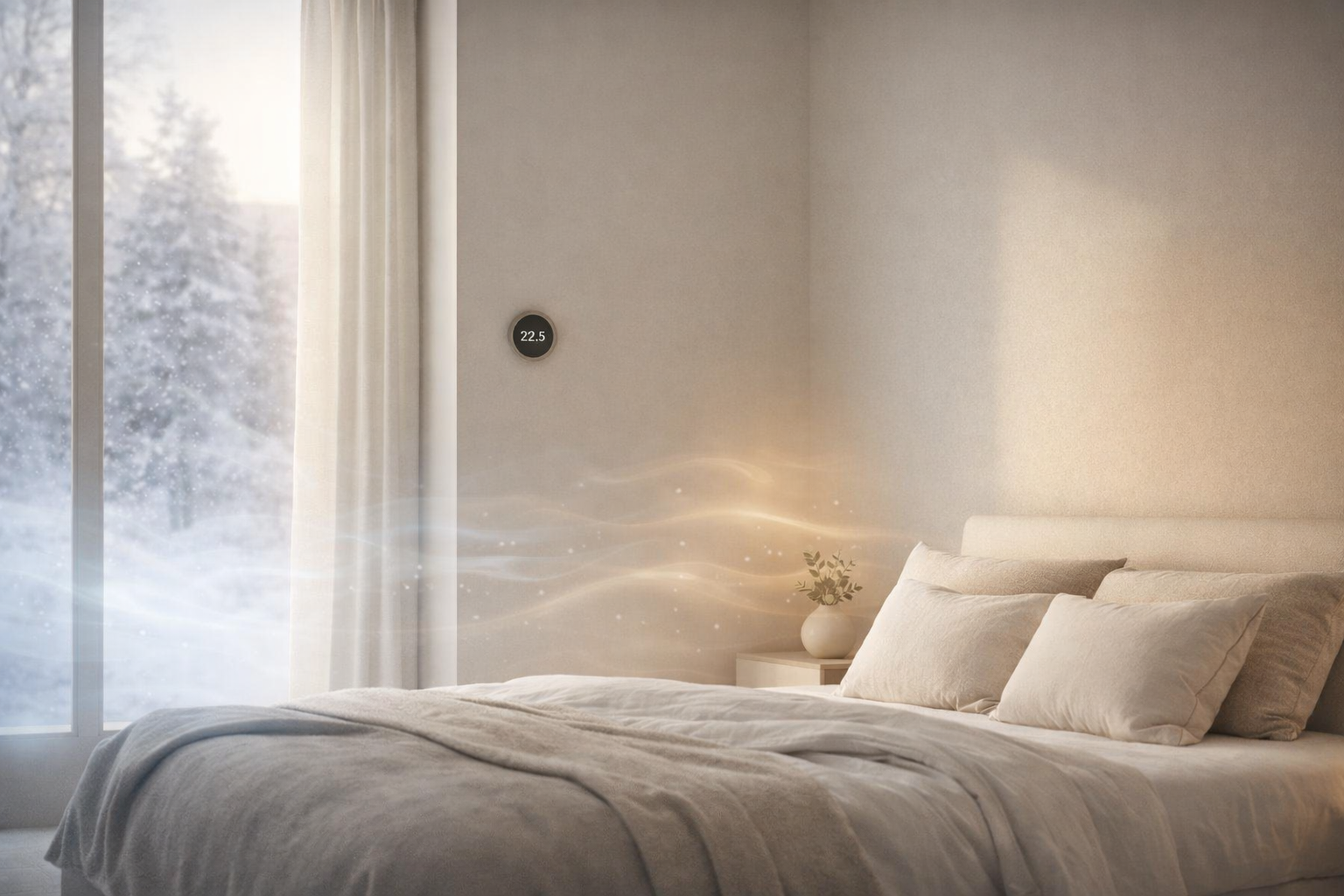
As temperatures drop across Europe, we are considering the impact that thermal comfort has on our health and wellbeing.
Thermal comfort in the body is regulated by the hypothalamus in the brain which aims to maintain the body’s core temperature within its range of 36-38 °C. Disruption to body temperature can affect mood, performance and productivity and even your health.
One of the greatest concerns with rising temperatures in Europe is over-heating. Many factors contribute to overheating risk in new or refurbished homes such as high proportions of glazing, single-aspect designs, community heating systems and insufficient natural ventilation strategies. There are a few models that provide recommended thermal comfort levels, taking into account outdoor temperature as well, and allowing for their occupants to control their environment.
According to CIBSE Guide A on Environmental design, the optimum temperature range for most people’s comfort should be 21-23ºC in winter and 22-24ºC in summer. These ranges are based on scientific research into productivity – which has been shown to drop by 2% for every degree the building temperature rises above 25°C.
The health and well-being impacts of overheating can include stress, anxiety, sleep deprivation and even early deaths in heatwaves, with in excess of 7,000 heat-related deaths predicted in the UK alone by the 2050s as summers get warmer, especially impacting vulnerable occupants.
Equally, when buildings are poorly insulated or poorly designed and occupants become cold, profound chemical changes also begin. Research shows that around 18 °C is the tipping point, when the body starts working to defend its core temperature.
At this point, a process known as vasoconstriction also begins, in order to direct warm blood to critical organs, often making your hands and feet feel cold. Women also tend to feel the cold more, because of hormones (specifically oestrogen) which makes blood vessels in hands and feet more likely to constrict. When air temperatures drop further, for example from 21 ºC to 10ºC, mean arterial blood pressure and heart rate increase, while blood flow to the brain falls.
This can affect not only human performance factors, such as concentration, memory and cognitive performance, but also your wider mental and physical wellbeing. For example, we know that children in cold homes are more than twice as likely to suffer respiratory problems than those living in warm homes and over 1 in 4 adolescents living in cold homes are at risk of multiple mental health problems, compared with 1 in 20 in warm housing.
These considerations are taken into account when creating design guidelines and guiding project teams, helping to ensure that buildings provide comfortable and safe temperatures passively through good design, and actively, through smart systems and technologies. For example, considering passive heat gain, solar shading and the types and colours of building materials used. In terms of technology, using smart building sensors coupled with good MVHR systems (Mechanical Ventilation with Heat Recovery) to maintain a constant flow of fresh air, whilst also keeping temperature constant. It is through factors like these that we can create comprehensive strategies to support the types of comfortable thermal environments that research shows helps us to thrive when we are indoors.
Two Paths
One Vision
When your home works in harmony with your biology, health stops being something you manage, it becomes something you live in.

For Developers
Build projects that define wellness real estate.

For Homeowners
Create a home that builds your health.