The Vault Theory: Why Your Home Is Your Most Undervalued Health Asset

.jpeg)
For the world's most driven individuals, health has become performance art, meticulously tracked, obsessively refined, endlessly quantified. You monitor glucose like a day trader watches markets. Your supplement regimen rivals a pharmacy's inventory.
And yet. That creeping fatigue persists.
I know this exhaustion intimately. I spent years engineering my biology while my environment quietly sabotaged every intervention. Sleeping under artificial light that confused my circadian rhythm. Working in beautifully designed yet poorly ventilated rooms. Living in spaces that looked like magazine spreads but functioned like metabolic prisons.
The revelation, when it came, was both obvious and radical: The spaces we inhabit are not neutral containers. They are active participants in our physiology.
Your home isn't just where you live. It's the most consistent variable in your health equation, and likely the most overlooked investment in your wealth.
The Fragmentation Trap
Modern wellness is fragmented. We try to fix the human while leaving the habitat unchanged. Red light therapy squeezed between Slack notifications. Fasting protocols in environments that keep your nervous system in chronic fight-or-flight.
It's rather like trying to sleep in a nightclub and wondering why the melatonin isn't working.
But here's what the optimization industrial complex won't tell you: light is a hormone. Air is information. Sound is chemistry. Materials are biological instructions your nervous system reads before you consciously do.
Health Is Not a Card. It Is the Table.
I once sat across from a founder who had just secured $100 million. On paper, he embodied success. In practice, he couldn't climb stairs without pausing, breathless.
The numbers bear this out: America spends $4.5 trillion annually on healthcare, with $3.7 trillion consumed by preventable conditions. Yet every dollar invested in prevention returns six, an ROI that would make any venture capitalist salivate.
Health isn't just the foundation of wealth. It is wealth, the original asset class, compounding or depleting with every space we inhabit.
The Science Is Unambiguous
At First Abu Dhabi Bank, three years of environmental strategy delivered what most programs only dream of: musculoskeletal claims fell 24%, pharmacy costs dropped 9%. They achieved this not through healthcare interventions, but through spatial design.
The mechanism is elegant: environments program biology through sensory input. Natural light synchronizes circadian rhythms. Views of nature trigger "soft fascination," allowing cognitive recovery. Multi-sensory experiences shift physiological state within minutes. (Johns Hopkins, 2024)
In psychiatric facilities redesigned with natural light and sensory-attuned materials, agitation measurably recedes. This isn't interior decoration. This is biological calibration.
Longevity Architecture: The New Frontier
This is where true luxury lives today, not in finishes, but in what you cannot see yet constantly feel. Air filtered to 0.3 microns. The quality of darkness at night. Materials free of endocrine disruptors. Thermal comfort requiring no adjustment.
In the Middle East, developers now compete on metrics unthinkable a decade ago: planting ratios, water pH levels, photon curves. Buildings achieve LEED and WELL Platinum as baseline. Global wellness tourism- $894 billion, projected to reach $1.68 trillion by 2030, represents humanity's collective hunger for restorative environments.
This is Longevity Architecture™: designing homes, hotels, and workspaces as health engines. Not wellness décor. Not spa aesthetics. But measurable, biological design that supports rather than taxes your physiology.
From Biohacking to Bioharmonizing
We've spent a decade hacking-forcing systems to override their design. What if the next frontier is harmonizing?
Most people average 4,000 steps daily. Research shows profound gains at 7,000, achieved not through heroic effort but through environmental nudges. Walkable spaces. Engaging surroundings. Suddenly, health isn't something you do. It's something that happens to you, the emergent property of an aligned system.
The Hidden Exchange
What if wealth's foundation isn't laid in boardrooms but in biology? Not in spreadsheets but in circadian rhythms?
The well-oxygenated brain makes sharper decisions. The regulated nervous system leads with vision, not reactivity.
Your body is the vault. Vitality is the key. And your environment is the code that unlocks it.
In an age that monetizes attention, health is rebellion. In a culture valuing speed, it is clarity. But you cannot supplement your way out of a sick building. You cannot meditate away poor air quality. You cannot biohack around misaligned environments.
The next frontier isn't found in another device or protocol. It's found in the 90% of your life spent indoors, in spaces that either support regeneration or signal dysregulation.
There is no neutral.
The most powerful form of wealth is the biology that lets you actually enjoy the life you're building. Design, it turns out, is the most undervalued lever in that equation.
True luxury is no longer the rarity of stone. It is the rarity of feeling well. The spaces we inhabit shape not only our days but our legacies and the greatest investment may be waking each morning in a home that reminds your body it is safe to thrive.
Two Paths
One Vision
When your home works in harmony with your biology, health stops being something you manage, it becomes something you live in.
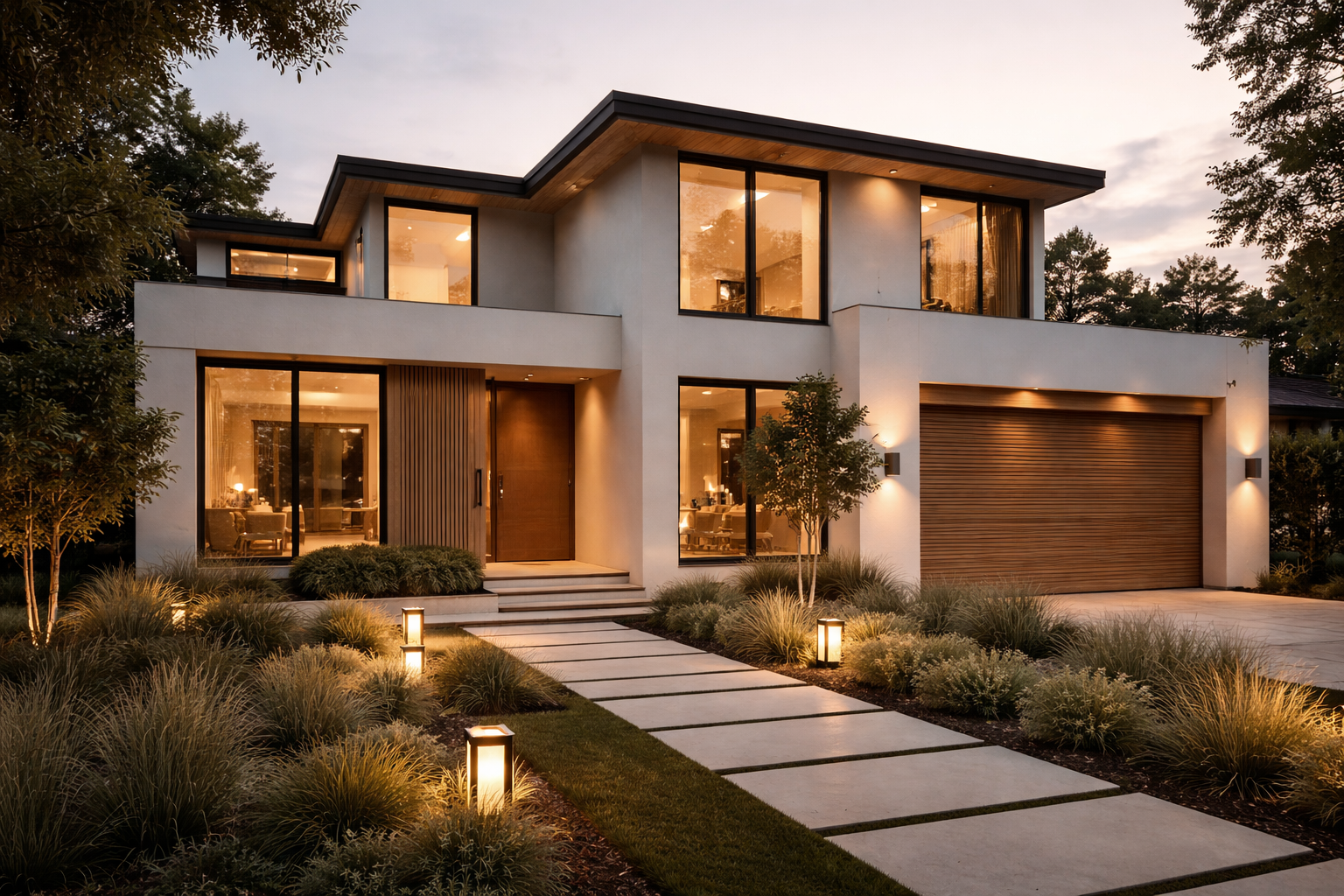
For Developers
Build projects that define wellness real estate.
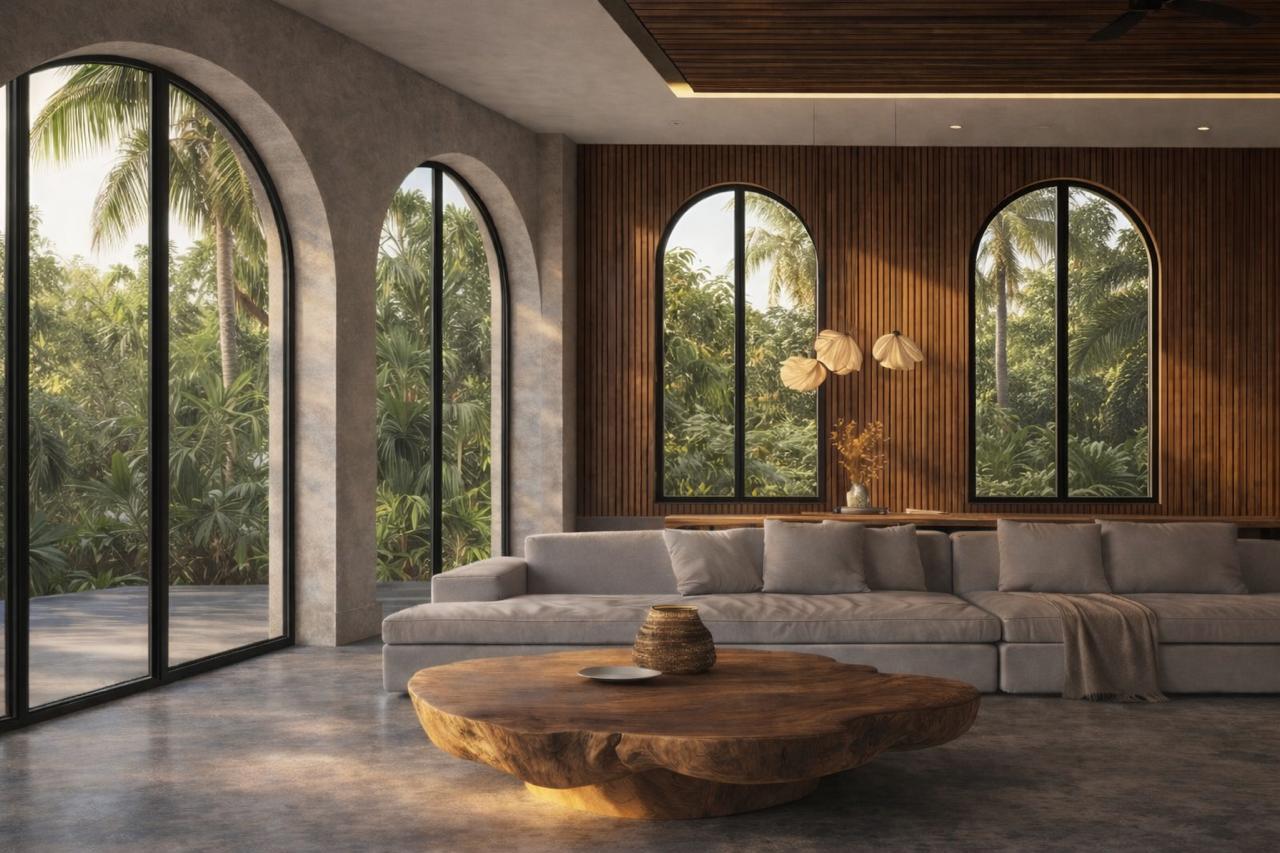
For Homeowners
Create a home that builds your health.